
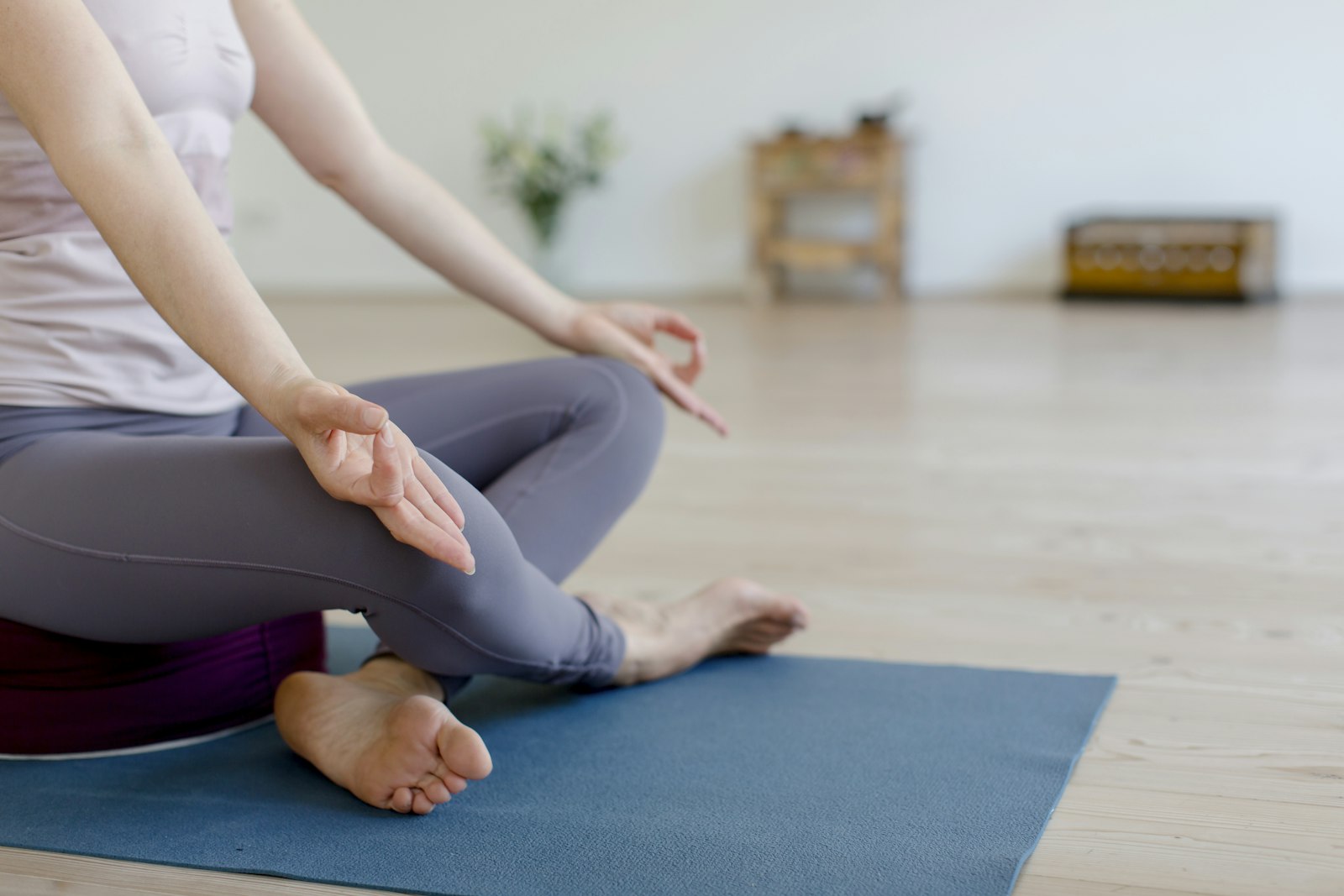
Your breath is one of the few parts of your nervous system you can influence directly. When you are stressed, breathing tends to become fast and shallow. Slowing it down — especially the exhale — can help signal to the body that it is safe to relax.
These five techniques are simple, need no equipment and can be practised almost anywhere. Stop if you feel dizzy or uncomfortable and return to normal breathing.
1. Belly (diaphragmatic) breathing
Place one hand on your chest and one on your belly. Breathe in slowly through your nose, letting the belly rise while the chest stays relatively still. Breathe out gently. Practise for two to five minutes. This is the foundation for every other technique.
2. Extended exhale breathing
Inhale through the nose for a count of four, then exhale slowly for a count of six or eight. A longer exhale is associated with a calmer heart rate for many people. It is ideal before sleep or after a difficult conversation.
3. Box breathing
Inhale for four counts, hold for four, exhale for four, hold for four. Repeat for four to six rounds. The steady rhythm gives a busy mind something to focus on. If holding feels uncomfortable, shorten the holds.
4. Alternate nostril breathing
Sit comfortably. Gently close the right nostril with your thumb and inhale through the left. Close the left with your ring finger, release the right and exhale. Inhale right, switch, exhale left. Continue for a few minutes. Many people find this balancing and focusing.
5. The physiological sigh
Take a normal breath in through the nose, then a second short “top-up” inhale, followed by a long, slow exhale through the mouth. One to three rounds can quickly ease a feeling of tension.
When to use each technique
- Before sleep: extended exhale or belly breathing
- Before a meeting or presentation: box breathing
- When you feel overwhelmed: the physiological sigh
- For a focused reset: alternate nostril breathing
Build a daily habit
Breathing techniques work best when practised regularly, not only in emergencies. Try two minutes in the morning and two before bed for a week. If you would like personal guidance, our yoga and breathwork and mindfulness and stress relief sessions teach these practices step by step.
If you have a heart, lung or blood-pressure condition, or are pregnant, speak to your doctor before practising breath holds.
This article is for general wellbeing education and is not medical advice. Please speak to your doctor before making changes if you have a health condition, are pregnant or take regular medication.