
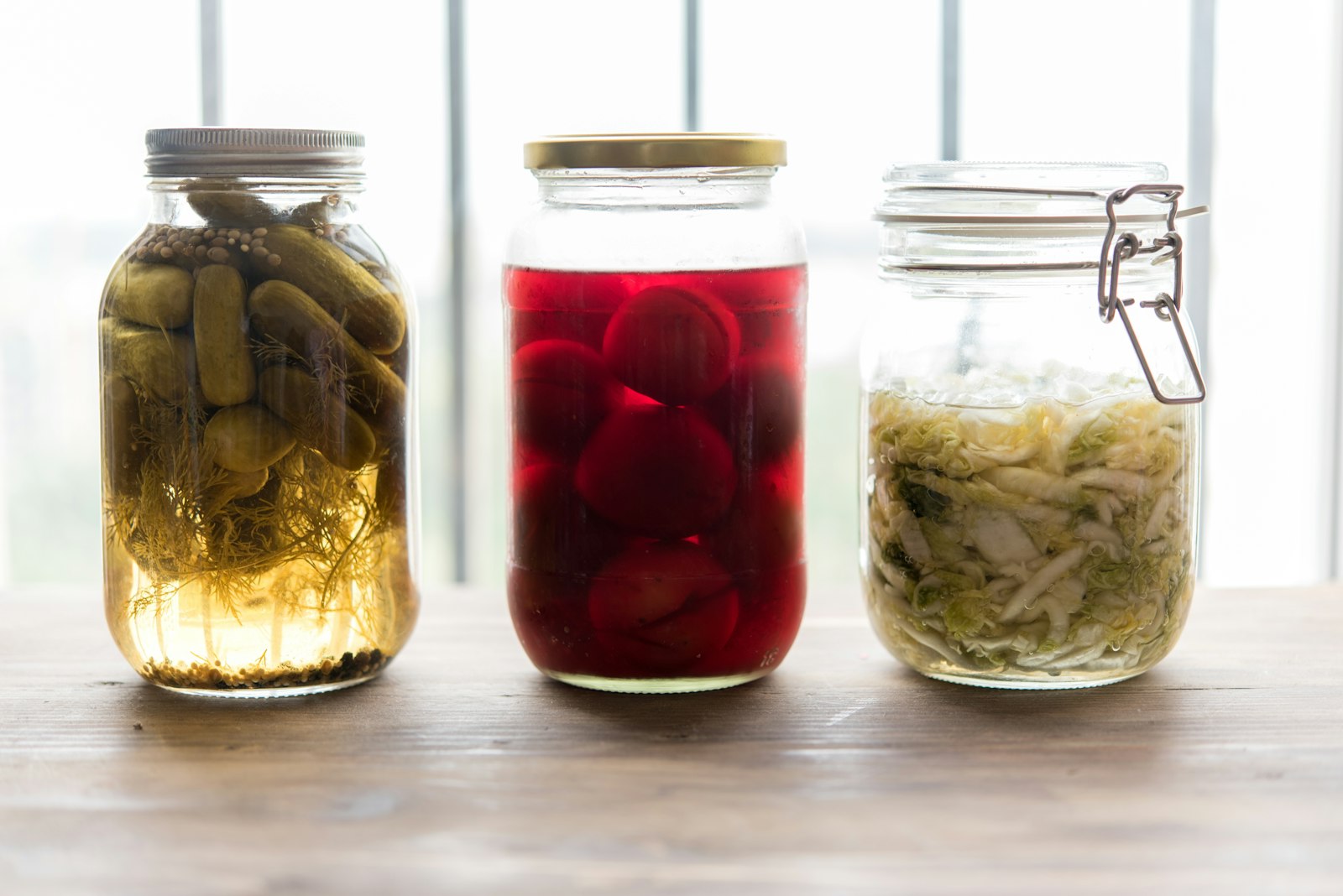
Fermentation is one of the oldest ways of preserving food. Beneficial microbes transform sugars and starches, creating tangy flavours and — in many cases — live cultures. Research into the gut microbiome has renewed interest in these traditional foods, and some studies suggest that eating a variety of fermented foods may help increase the diversity of gut bacteria.
Common fermented foods
- Yoghurt and curd: choose plain versions with live cultures and add your own fruit
- Kefir: a tangy fermented milk drink, also available in water-based versions
- Sauerkraut and kimchi: fermented cabbage and vegetables; look for unpasteurised versions in the chilled section
- Pickles fermented in brine: not vinegar pickles, which usually contain no live cultures
- Fermented batters: such as those used for some traditional pancakes and steamed cakes
- Miso and tempeh: fermented soy foods rich in flavour
How fermented foods may support wellbeing
Fermented foods can provide live microbes, and the fermentation process may make some nutrients easier to digest. They also tend to replace less nourishing, highly processed choices. However, research is still developing, and effects differ between people. Think of them as one helpful part of a varied, fibre-rich diet rather than a cure.
Do not forget fibre
Beneficial gut bacteria feed on fibre from plant foods. Beans, lentils, whole grains, vegetables, fruit, nuts and seeds all help. A plate that combines fermented foods with plenty of plants is ideal.
How to start gently
If you are new to fermented foods, begin with small amounts — a spoonful of sauerkraut or a small bowl of yoghurt — and increase gradually. Some people notice temporary bloating when they add new fermented or high-fibre foods.
- Add a spoonful of kimchi or sauerkraut to rice bowls or salads
- Enjoy plain yoghurt with breakfast or as a side to spicy meals
- Use miso in soups and dressings, adding it at the end of cooking
- Try a small glass of kefir as an afternoon snack
Who should be careful?
People with weakened immune systems, histamine intolerance or certain digestive conditions may need to limit fermented foods. Many fermented products are also high in salt. If you have a health condition, check with your doctor or dietitian first. Our nutrition guidance can help you introduce them in a way that suits you.
Key takeaways
- Fermented foods with live cultures can add variety and flavour to a gut-friendly diet
- Pair them with plenty of fibre-rich plant foods
- Start small and increase gradually
- Seek advice if you have immune or digestive conditions
This article is for general wellbeing education and is not medical advice. Please speak to your doctor before making changes if you have a health condition, are pregnant or take regular medication.